Table of Contents
Why Does My Pool Smell Strongly of Chlorine? The Science Behind the Smell
If your pool in Houston has a strong chlorine smell, you are not alone. Many homeowners mistakenly believe a strong odor means too much chlorine. In reality, that pungent smell is caused by chloramines, not free chlorine. Chloramines form when chlorine reacts with ammonia from sweat, urine, cosmetics, or other organic matter.
A healthy pool should have little to no odor. The absence of smell indicates effective sanitation. When you smell chlorine, it signals that chloramine levels are elevated and your pool chemistry is out of balance. Understanding this is the first step to fixing the problem.
The Unique Challenges of Houston’s Climate for Pool Chemistry
Houston’s hot, humid climate creates ideal conditions for algae and bacteria growth, requiring more chlorine. However, high bather loads from summer parties and frequent rainstorms can overwhelm chlorine, leading to chloramine buildup. The humidity also accelerates evaporation of chlorine gas, worsening odor perception.
Local factors like Houston’s water hardness (high calcium) and potential contaminants from nearby construction or pollen can further complicate pool chemistry. To effectively fix a strong chlorine smell in your Houston pool, you must address these local variables.
Step 1: Test Your Water Accurately – Free Chlorine vs. Combined Chlorine
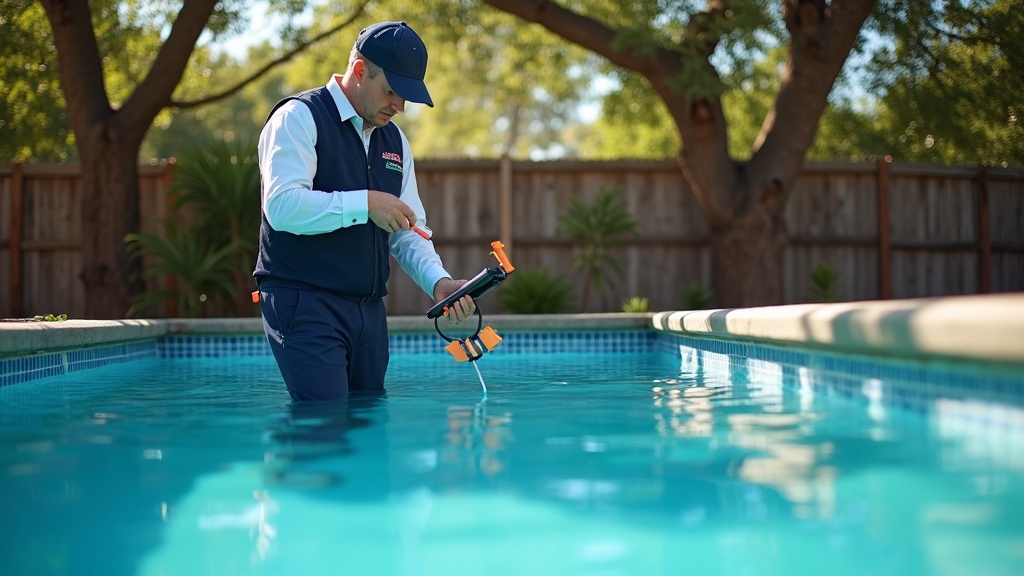
You cannot fix what you do not measure. Use a high-quality DPD test kit or digital photometer to measure free chlorine (FC) and combined chlorine (CC). Total chlorine = FC + CC. The goal is FC between 1-3 ppm and CC less than 0.5 ppm. If CC is above 0.5 ppm, chloramines are present.
In Houston, companies like Leslie’s Pool Supplies or Pinch A Penny offer free water testing. For precise results, consider a Taylor K-2006 test kit. At Choyce Services, we use industry-grade testing to diagnose issues. Never rely on test strips alone for chloramine detection.
Step 2: Shock the Pool to Eliminate Chloramines
To break down chloramines, you must shock the pool with a non-stabilized chlorine (calcium hypochlorite) or a non-chlorine shock like potassium monopersulfate (MPS). The standard dose is 10-12 ppm of FC for chlorine shock, or follow MPS label directions. Perform shocking at dusk to avoid sunlight degradation.
Houston’s tap water can be high in phosphates, which feed algae and increase chlorine demand. Use a phosphate remover before shocking for best results. For heavy chloramine issues, a superchlorination (20-30 ppm FC) may be required, but monitor pool surface for damage.
Step 3: Maintain Proper pH and Alkalinity
Chlorine is most effective at pH 7.4-7.6. If pH drifts above 8.0, chlorine becomes up to 90% less effective, forcing you to add more and creating more chloramines. Low pH can damage equipment. Test and adjust pH weekly using muriatic acid or sodium bisulfate.
Total alkalinity should be 80-120 ppm. In Houston, alkalinity often drops after heavy rain. Use alkalinity increaser (sodium bicarbonate) to buffer pH. At Why Is My Swimming Pool Smelly? we discuss chemistry basics further.
Step 4: Use an Enzyme Clarifier or Oxidizer
Enzyme products like Natural Chemistry’s Pool First Aid or Bioguard’s Oxyshock break down organic contaminants before they form chloramines. These are especially effective in Houston where pollen and tree droppings are common. Add enzymes weekly to reduce chlorine demand.
Non-chlorine oxidizers (MPS) can also remove chloramines quickly without adding stabilizer. For persistent odors, alternate between chlorine shock and MPS shock every week.
Step 5: Improve Filtration and Circulation
Dead spots in circulation allow chloramine buildup. Run your pump 8-12 hours daily, longer in hot Houston summers. Clean or backwash your filter (DE, sand, or cartridge) regularly to ensure maximum flow. If filter pressure rises 10 psi above normal, clean immediately.
Consider adding a UV-C or ozone system to continuously break down chloramines. These are popular in Houston pools especially for commercial applications.
Step 6: Reduce Contaminant Introduction
Encourage swimmers to shower before entering. Enforce no-urination rule (yes, it matters). Use pool covers to keep out leaves and debris. After heavy winds or rain, skim and clean pool before adding chemicals.
In Houston, live oak pollen in spring and cedar elm in fall create high organic loads. Regularly using a pool skimmer sock can catch fine debris. Also, ensure proper water level to maintain skimmer efficiency.
Step 7: Consider a Chlorine Alternative (UV, Salt, or AOP)
If chloramine issues persist, consider a salt chlorine generator (SWG). It produces chlorine gradually, reducing spikes. Combined with a UV sterilizer, it can keep chloramines low. Advanced oxidation processes (AOP) like ozone + UV are highly effective and used by many Houston high-end pools.
However, salt cells need regular cleaning due to Houston’s hard water. Consult a professional at Pool Services In Houston for installation.

When to Call a Professional Pool Service in Houston
If you have followed all steps and the odor persists, call a certified pool operator. Chronic chloramine problems may indicate insufficient filtration, hidden algae, or a chemical imbalance that requires professional dosing. Choyce Services offers comprehensive diagnostics and treatment plans tailored to Houston’s water.
Also, if you suspect a leak or equipment malfunction, check our guide on 5 Signs That My Pool Is Leaking. Leaks can dilute chemicals and cause imbalance, contributing to odor.
Comparison of Shocking Methods for Chloramine Removal
| Method | Active Ingredient | Pros | Cons | Best For |
|---|---|---|---|---|
| Chlorine Shock | Calcium hypochlorite | Powerful sanitizer, kills algae | Adds calcium, may precipitate in hard water | Heavy chloramines after parties |
| Non-Chlorine Shock | Potassium monopersulfate | No CYA addition, swim soon after | Not a sanitizer, additional chlorine needed | Quick odor fix without chlorine spike |
| Lithium Hypochlorite | Lithium hypochlorite | Dissolves quickly, no calcium | Expensive | Vinyl liners, hard water areas like Houston |
| Ozone + UV | Ozone and UV light | Continuous chloramine reduction | Higher initial cost | Persistent odor, commercial pools |
Preventative Maintenance Schedule for Houston Pool Owners
Weekly: Test pH, FC, CC, alkalinity, and CYA. Adjust as needed. Skim surface daily. Run pump 8-12 hours.
Monthly: Clean filter, check for leaks, inspect salt cell (if applicable). Shock with non-chlorine oxidizer. Add enzyme clarifier.
Seasonally: Drain and refill partial water in spring to lower CYA. Have a professional inspect equipment at Choyce Services. Sign up for Contact Us for routine service.
Frequently Asked Questions About Strong Chlorine Smell in Houston Pools
Can high chlorine cause a strong smell?
No. The smell is from chloramines, not free chlorine. High free chlorine usually has little odor.
How often should I shock my pool in Houston?
Weekly during summer, after heavy use or rain. Use non-chlorine shock weekly and chlorine shock bi-weekly.
Will adding more chlorine fix the smell?
Only if you superchlorinate to breakpoint (10x combined chlorine level). Otherwise, it makes it worse.
Does rain affect chlorine smell?
Yes. Rain adds contaminants and dilutes chemicals, increasing chloramine formation. Test after storms.
Is a strong chlorine smell dangerous?
It can cause eye and skin irritation. High chloramines produce irritating gases. Fix promptly.
Frequently Asked Questions
Can high chlorine cause a strong smell?
No. The smell is from chloramines, not free chlorine. High free chlorine usually has little odor.
How often should I shock my pool in Houston?
Weekly during summer, after heavy use or rain. Use non-chlorine shock weekly and chlorine shock bi-weekly.
Will adding more chlorine fix the smell?
Only if you superchlorinate to breakpoint (10x combined chlorine level). Otherwise, it makes it worse.
Does rain affect chlorine smell?
Yes. Rain adds contaminants and dilutes chemicals, increasing chloramine formation. Test after storms.
Is a strong chlorine smell dangerous?
It can cause eye and skin irritation. High chloramines produce irritating gases. Fix promptly.